
When Strangers' Heartbeats Shape a Virtual World
In simple terms: Heightened Empathy is a multi-user VR installation where two strangers experience a shared virtual environment that responds to both of their biosignals-heart rate, breathing, skin conductance. As they become more emotionally synchronized, the world transforms, creating a shared journey from disconnection to connection.
🎯 Key Takeaways
- Biosignal-driven environment - the VR world responds to both participants' physiological states
- Emotional synchronization - the system tracks how aligned participants' biosignals become
- Journey from isolation to connection - the experience is designed to create empathy between strangers
- Art + Science - premiered at SIGGRAPH 2023 Immersive Pavilion as an artistic experience
- Research insights - generated data about how shared VR affects emotional connection
The Vision: Technology for Human Connection
What if VR could help strangers become less strange to each other?
Heightened Empathy began with this question. We wanted to create an experience where technology didn't just connect people visually or audibly, but emotionally-through the invisible rhythms of their bodies.
The Experience
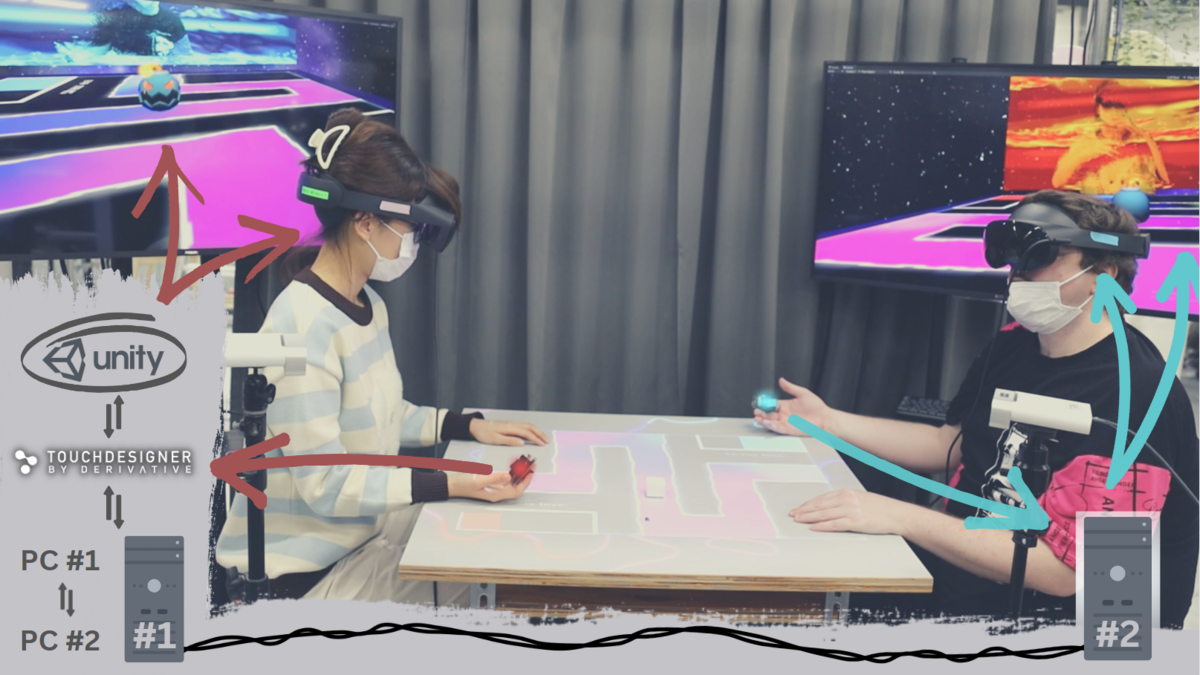
Two participants who have never met put on VR headsets and biosensors. They enter a abstract virtual environment-initially, it appears fragmented, chaotic, cold.
Act 1: Isolation
Each participant sees the environment from their own perspective. Elements in the world reflect their individual biosignals:
- Heart rate affects visual pulsing
- Stress levels influence color temperature
- Breathing affects ambient movement
At first, the two participants' influences conflict, creating visual discord.
Act 2: Awareness
Gradually, participants become aware of each other's presence. They can see how the other person's signals affect shared elements. Visual cues help them understand:
- "That pulsing is their heartbeat"
- "That color shift is their stress response"
Act 3: Synchronization
As participants begin to consciously or unconsciously align their breathing and emotional states, the environment responds:
- Colors become more harmonious
- Movements become more coordinated
- New, beautiful elements emerge that only appear when both are in sync
Act 4: Connection
By the end, participants who began as strangers have shared an intimate experience. They've literally seen their emotional states intertwine. Many participants report feeling connected to someone they've never spoken to.
The Technology
Biosignal Capture
We capture multiple physiological streams:
- Heart rate and HRV via chest strap
- Breathing rate via respiratory band
- Skin conductance via wrist sensors
Synchronization Detection
Our algorithm tracks how aligned the two participants' signals become:
- Respiratory synchrony
- Heart rate variability coherence
- Skin conductance correlation
Higher synchrony unlocks more harmonious environmental states.
Real-Time Environment Generation
The VR environment is procedurally generated based on:
- Individual biosignal features
- Synchrony metrics
- Progression through the narrative arc
No two experiences are identical.
SIGGRAPH Immersive Pavilion
We premiered Heightened Empathy at SIGGRAPH 2023's Immersive Pavilion-a venue for cutting-edge artistic and research VR experiences.
Over three days, dozens of stranger pairs went through the experience. Watching people emerge from the headsets-often emotional, often wanting to talk to their partner for the first time-was deeply moving.
What We Observed
Physiological Synchrony Increased
Participants showed significantly higher biosignal synchrony at the end of the experience compared to the beginning. This happened even without verbal communication.
Subjective Connection Formed
In post-experience interviews, participants described:
- "I felt like I knew them without knowing them"
- "We went through something together"
- "It was intimate in a way I didn't expect"
Non-Verbal Communication Emerged
Participants developed implicit communication:
- Deliberately slowing breathing to calm the environment
- "Responding" to the other's stress with calming signals
- Creating rhythmic patterns together
Ethical Reflection
Heightened Empathy raises important questions:
Manufactured Connection?
Is connection through technology "real"? We believe the emotions participants felt were genuine, even if the context was artificial. Like other designed experiences (concerts, retreats), the design creates conditions for authentic human experience.
Privacy of Internal States
Sharing biosignals is intimate. Participants consented and were briefed, but broader applications would need careful privacy consideration.
Potential for Manipulation
If technology can create connection, it could potentially be misused. We're thoughtful about publishing approaches that could be weaponized.
📚 Personal Reflections: What I Learned
Art and Science Feed Each Other
Creating Heightened Empathy as an art piece freed us from some academic constraints. We could prioritize emotional impact over controlled conditions. But the insights were scientifically valuable nonetheless.
Connection Can Be Designed
Before this project, I might have said connection was something that happens organically between people. Now I know that design can create conditions where connection is more likely. This doesn't make it less real.
Bodies Connect Before Words
The participants in Heightened Empathy connected through physiological rhythms before any verbal exchange. This reinforced my belief that embodied experience is primary-language comes later.
Technology Can Be Humanizing
There's a narrative that technology isolates us. Heightened Empathy demonstrates the opposite potential: technology that brings strangers into intimate connection.
Connection to My Research
Heightened Empathy embodies themes from across my work:
- Biosignal sensing - the technical foundation
- Affective computing - emotion recognition and response
- Collaborative VR - shared virtual experiences
- Empathy through technology - the deepest goal
It's perhaps the most artistic expression of my research question: How can technology help humans connect more deeply?