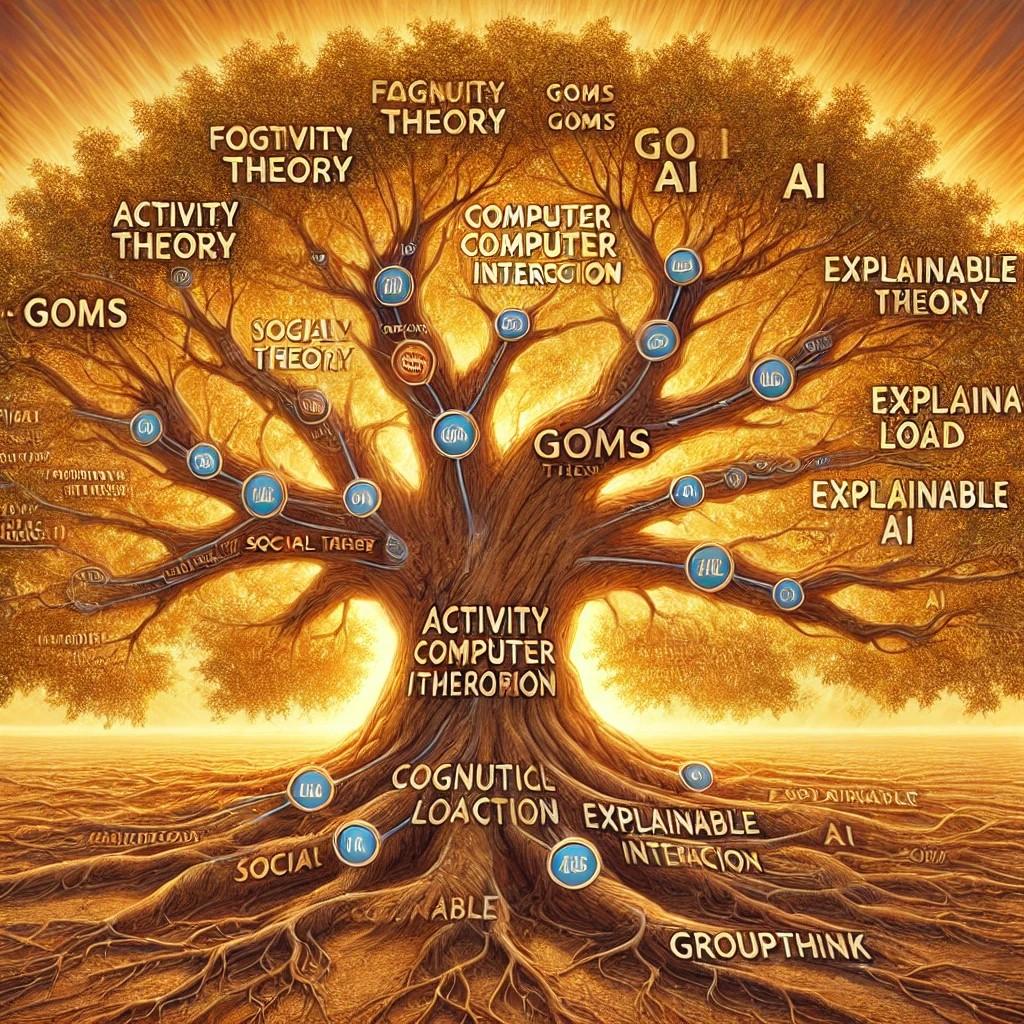
The Evolution of HCI, HAI, and Behavioral Science Theories
The fields of Human-Computer Interaction (HCI), Human-AI Interaction (HAI), and the study of group behavior are constantly evolving, driven by rapid technological advancements and a deeper understanding of human psychology and social dynamics.
Human-Computer Interaction (HCI) Theories
These theories focus primarily on the interaction between individual users and computer systems:
Activity Theory (Leont'ev, Engeström): Views human activity as a complex, socially situated phenomenon, emphasizing the interconnectedness of subject, object, tools, rules, community, and division of labor.
Distributed Cognition (Hutchins): Argues that cognition isn't confined to an individual's head, but is distributed across individuals, artifacts, and the environment.
GOMS Model: Breaks down tasks into Goals, Operators, Methods, and Selection Rules-useful for predicting user performance.
Cognitive Load Theory (Sweller): Distinguishes between intrinsic, extraneous, and germane load-crucial for interface design.
Fitts' Law: Predicts pointing time based on target distance and size-a cornerstone of GUI design.
Human-AI Interaction (HAI) Frameworks
Computers as Social Actors (CASA): People tend to treat computers as social actors, applying social rules to their interactions.
Explainable AI: Frameworks like LIME and SHAP make AI decision-making transparent and understandable.
Trust in Automation: Explores factors influencing human trust in AI agents-crucial for acceptance.
Mixed-Initiative Interaction (Horvitz): Systems where humans and AI share control and collaborate on tasks.
Behavioral Science & Group Behavior
Self-Determination Theory: Emphasizes autonomy, competence, and relatedness for intrinsic motivation.
Nudge Theory: Small design changes can guide better decisions without restricting choice.
Social Identity Theory: People derive sense of self from group memberships-important for online communities.
Groupthink: The tendency for cohesive groups to make poor decisions due to conformity pressure.
This theoretical landscape informs how we design more effective, engaging, and ethical interactive systems.